

Equine-assisted interventions are an exceptionally effective and holistic form of developmental support for children, young people and adults, which is why they are increasingly recognised as an innovative professional method in counselling, therapy and education, and in providing psychosocial and psychotherapeutic support for better mental health.
Through its movement, the horse has a positive effect on the development of motor abilities and skills, on improving posture, balance and coordination, regulating muscle tone, stabilising the pelvis and improving joint mobility. Science has been confirming this for decades.
The horse is also an extremely powerful motivator and confidant, so in its presence we can learn to tackle various life challenges, hardships and difficulties. Equine-assisted interventions encourage us to develop, think and feel, and give us the motivation to successfully overcome obstacles.
Equine-assisted interventions can be preventive or therapeutic-rehabilitative in focus.
Preventive interventions are for everyone who recognises the importance of a healthy lifestyle, as they help build good life habits, encourage outdoor exercise and active leisure, are relaxing and strengthen good relationships.
Therapeutic-rehabilitative interventions, i.e. equine-assisted therapy (EAT), are intended for various target groups.
Who is equine-assisted therapy (EAT) for?
- children and young people with emotional disorders,
- children and young people with behavioural difficulties,
- children and young people with specific learning difficulties and/or hyperkinetic disorder,
- children, young people and adults with special needs
- intellectual disability
- autism spectrum disorder,
- speech and language difficulties,
- blindness and visual impairment,
- deafness and hearing impairment,
- physical disability.
- people facing mental distress
- depression,
- bipolar disorder,
- anxiety,
- stress,
- personality disorders,
- eating disorders,
- obsessive-compulsive disorders,
- addictive disorders…
- people who need medical or psychosocial rehabilitation
- due to diseases of the central and peripheral nervous system (e.g. spasticity, ataxia, dyskinesia, multiple sclerosis …),
- due to musculoskeletal diseases,
- due to an acquired head injury (e.g. after an accident or stroke),
- due to long-term illness.
How does equine-assisted therapy (EAT) have a positive effect, help and benefit?
- it improves general psychophysical well-being
- relaxation,
- a greater sense of acceptance, safety and social inclusion,
- greater motivation for physical activity,
- greater motivation to face everyday challenges,
- improved general mood.
- motor and perceptual abilities improve
- improved motor skills and abilities (body alignment, body symmetry, balance and coordination, more functional posture, muscle activation, regulated muscle tone, a stabilised pelvis, improved joint mobility),
- improved perception and awareness of one’s own body,
- improved spatial orientation.
- it improves self-understanding and self-acceptance
- a greater capacity for trust, attachment and feelings of friendship,
- greater self-confidence, self-trust and a positive self-image,
- a better ability to cope with fears, stress and everyday difficulties,
- recognising one’s own reactions and behaviour patterns,
- acquiring work habits and personal discipline,
- learning to take responsibility for one’s own decisions and actions,
- greater independence in various areas (e.g. in caring for oneself and others, in making contacts and joining in socially, in learning and work, in spending free time),
- managing negative emotions and coping with life’s setbacks more easily,
- better knowledge of one’s own personality, values, wishes, patterns of feeling and thinking, conflicts, fears, etc…
- social competences and emotional intelligence improve
- developing empathy and a compassionate attitude to the world around us,
- a better ability to adapt to group dynamics and stimuli from the environment,
- uncovering the causes of frustration and conflict, resolving inner dilemmas and raising frustration tolerance,
- fewer aggressive behaviour patterns,
- a greater ability and willingness to cooperate and join in with a group,
- an improved communication style,
- better relationships in the family, among peers and at work.
- Cognitive abilities improve
- improved memory,
- improved attention and concentration,
- improved general knowledge and organisational and executive functions,
- improved speech and vocabulary,
- improved thinking processes,
- an improved ability to learn and discovery of more suitable learning styles,
- an improved ability to organise oneself.
What does equine-assisted therapy (EAT) involve?
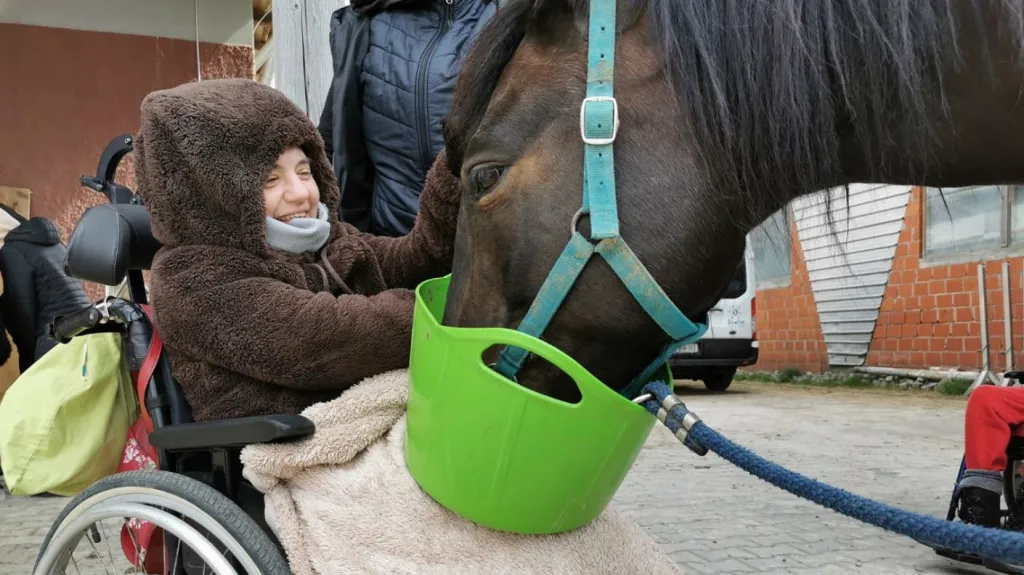
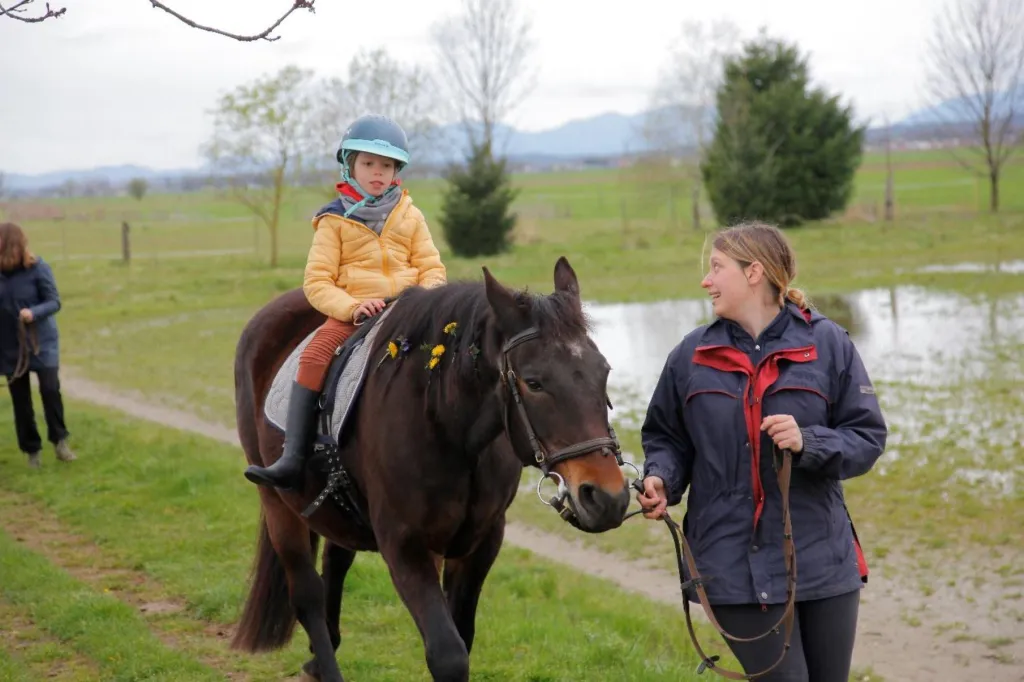
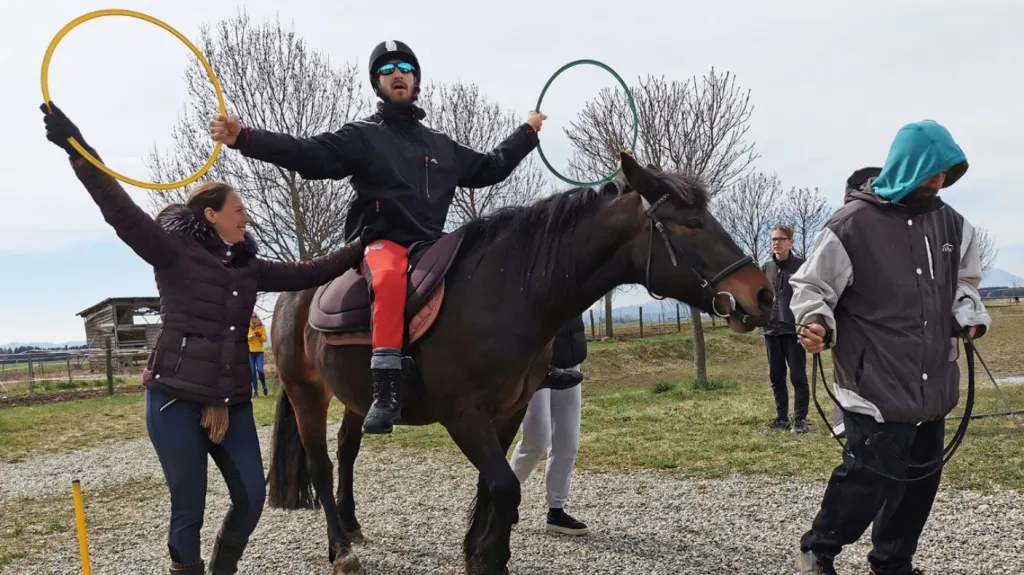
Therapy sessions take place beside and on the horse, as the goals set in advance can be pursued through various situations and activities: while grooming the horse, by observing the dynamics in the herd, through goal-oriented tasks and chores around the horse, and by spending time with the horse, peers or other participants in the therapy group.
When you join, your therapist draws up an individualised programme or therapy plan describing the selected methods, procedures and aids that will help us reach the chosen therapeutic goals.
The therapist also suggests how often and how long the sessions should be. The programme usually takes place once a week and comprises at least 12 consecutive sessions. Together with our clients, we often decide on year-round therapy as well.
Sessions can be individual, in pairs, for families or in groups.
Individual sessions usually last 30 to 45 minutes, and group sessions 60 to 90 minutes.
At the therapist’s discretion, once the period of therapy has ended, the person can continue with activities in the “Healthy Growing Up with Horses” programme, which we can also adapt specially for people with special needs. – A RECREATIONAL PROGRAMME OF RIDING and SPENDING TIME WITH HORSES FOR PEOPLE WITH SPECIAL NEEDS.
Who can provide equine-assisted therapy (EAT)?
Equine-assisted therapy is provided by professionals in education, healthcare and social care who have completed the appropriate specialisation.
Who provides equine-assisted therapy (EAT) at our Nazaj na konja Institute?
- Metka Demšar Goljevšček, BA in Pedagogy, equine-assisted therapist,
- Kaja Koleša, BA in Social Work, equine-assisted therapist,
- Maša Bastič, BSc in Biopsychology, equine-assisted therapist.
Who provides equine-assisted therapy and activities in Slovenia?
Register of professionals providing equine-assisted interventions in Slovenia.